It’s time to put misogyny on mute
The release of Louis Theroux’s recent documentary ‘Inside The Manosphere’ has shone a spotlight on the toxic and insidious world of the manosphere, highlighting a worrying rise in misogyny and other harmful ideologies being legitimised by podcast and social media personalities.
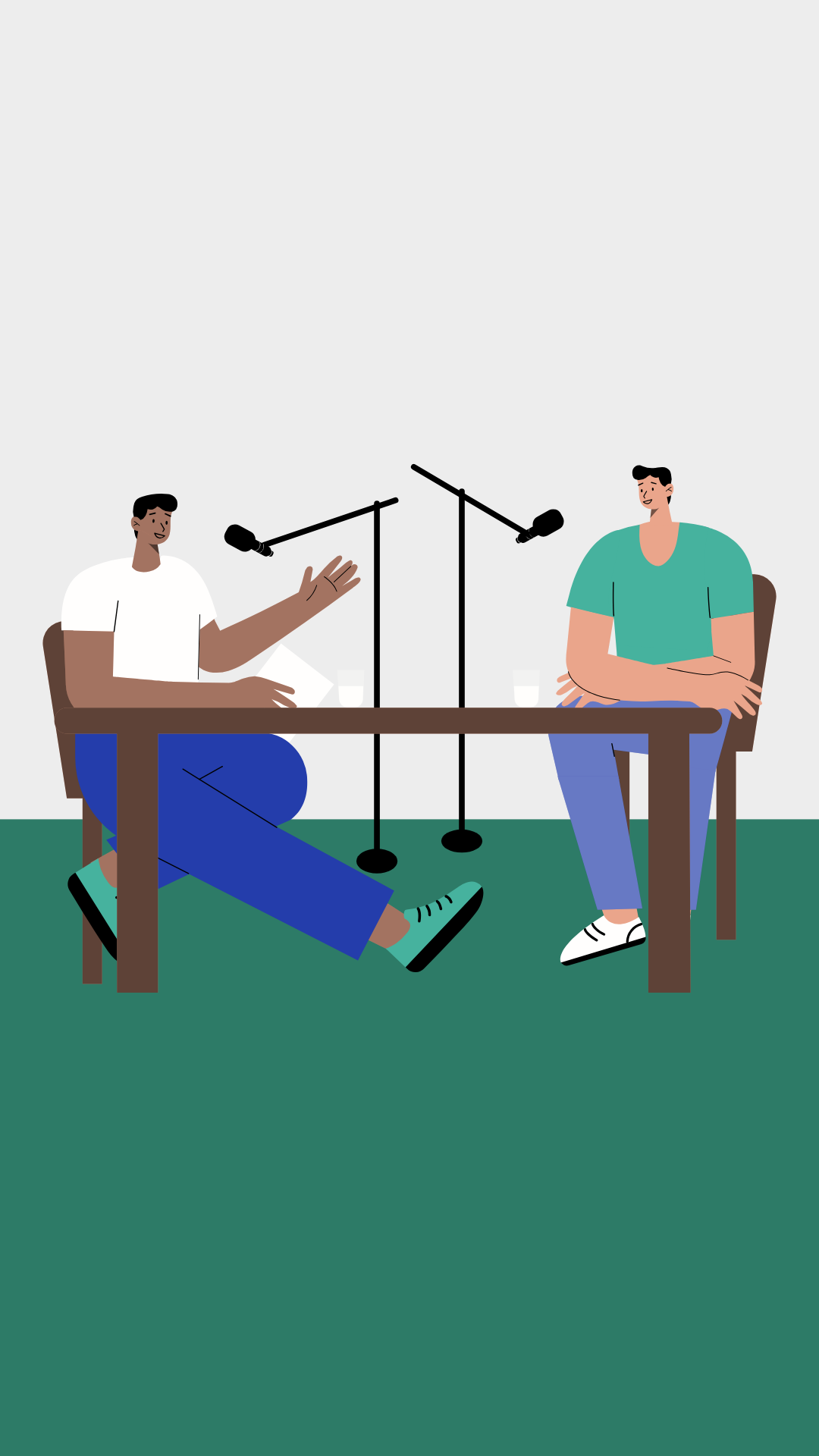
Online platforms such as YouTube, TikTok, Spotify, Apple Podcasts and Instagram play a major role in influencing public attitudes, particularly among young people, and in doing so, are intrinsically linked to the shaping of cultural attitudes and societal norms. Podcasting is a unique media form in the fact that we can engage with it without restriction. For many of us, podcasts accompany our daily activities, from driving to work to working out at the gym. Compared with other mediums, this unlimited access can create a sense of intimacy and community between podcast hosts and their listeners, further cementing their potentially ideological influence over their audience.
With such a great influence and access to individuals, there must be an equally great responsibility and accountability for podcasters. However, with a lack of the regulation we see maintaining standards and safety across other media forms, harmful content can be perpetuated with minimal and inconsistent regulation.
While podcast platforms are entrusted to manage standards across the podcasts they platform, regulations will continue to be inconsistent and inefficient, whilst content creators who publish harmful, discriminatory content that traditional media would never get away with continue to gain momentum, audience size, and most worryingly, cultural influence. Platforms such as Apple Podcasts and Spotify have their own priorities, the largest of which is making a profit. With this in mind, it seems naïve to entrust the oversight of this content to those who benefit most from controversial and click-baity content.
We believe that the groundwork is already in place, with the Online Safety Act 2023 and the Communications Act 2003. We now want to see this legislation applied to podcasting, ensuring that there are standardised regulations overseen by Ofcom in order to limit harm and delegitimise these dangerous ideologies, which endanger not just women and protected groups, but everyone.
This isn’t an attack on free speech or an attempt to prevent anything offensive from being published. This is about limiting the very real harm that is done when misogynistic and bigoted ideologies are perpetuated and legitimised by mainstream platforms.
A 2025 YouGov survey found that 67% of secondary school teachers said that misogyny among boys at their school was a big problem. Additionally, 60% of secondary school teachers say the issue has become worse in recent years. With Louis Theroux’s recent documentary highlighting just how popular many of these controversial ‘manosphere’ figures are amongst young boys, we need the government to act.
With recent discussion around under-16’s access to social media due to the dangers of these platforms, we should be equally concerned with the content they have unlimited access to in the form of podcasts.
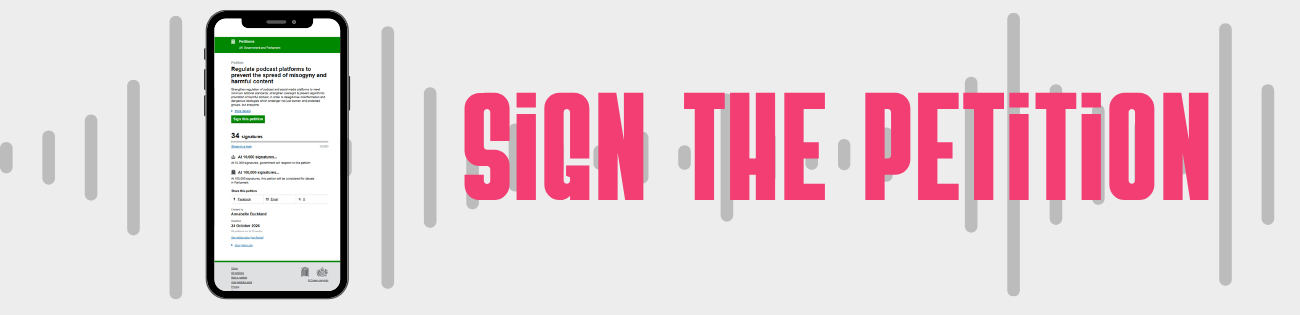
We are urging the government to investigate the harm caused by podcasts with misogynistic, racist, homophobic, bigoted and intolerant themes as well as the influence they have on culture and individuals. We also appeal to the government to introduce standardised regulations to hold all podcast platforms responsible for the content available through their platforms, under the same set of guidelines (with equally standardised processes for taking action against non-compliant podcasts).
We believe the Government should strengthen online safety regulation to:
require platforms to meet minimum editorial and safety standards for hosted content
limit algorithmic promotion of harmful or discriminatory material, particularly to under-18s
introduce stronger accountability for large podcasts with significant reach
ensure platforms take effective action where content breaches these standards
With Ofcom now holding powers to regulate global streaming services such as Netflix, Disney+ and Prime Video, we question why this has not been extended to podcasting platforms such as Spotify, Apple Podcasts and YouTube.